


-
By:Vivek Pathak
-
Blog
-

( 0 )

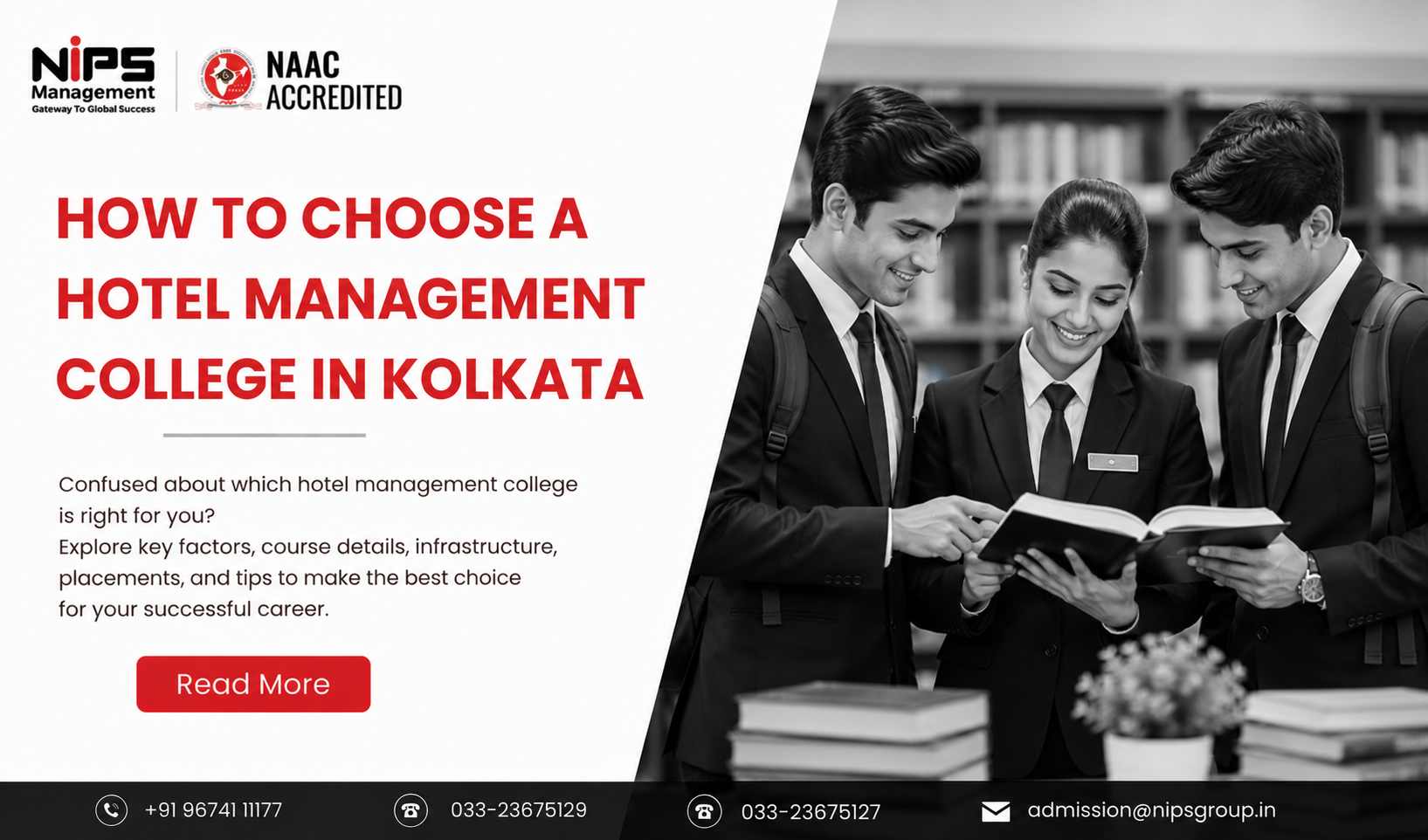
Choosing the right hotel management college in Kolkata depends more on who teaches your child than on which campus looks best. Industry-experienced faculty, real hotel internships at properties like ITC Sonar Bangla, Taj Bengal, and JW Marriott, and genuine mentoring relationships are what determine whether a graduate is job-ready from day one. Buildings and fees are visible. The quality of teaching is what actually shapes a career.
Every year, thousands of families in Kolkata spend weeks shortlisting hotel management colleges. They visit campuses. They photograph the kitchens. They compare fee structures in spreadsheets. Some of them bring a checklist.
And almost none of them ask the most important question.
Who will actually teach my child?
Not which college has the nicest building. Not which one offers the lowest fee. Not even which one has the most placements listed on their website. The question that determines whether your child walks into their first hotel job confident and capable is about the people who stood in front of them for three years.
This piece is written for parents and students in Kolkata who are serious about making the right choice. Not just a good choice. The right one.
Why Parents Get This Wrong
There is a reason why campus tours focus on kitchen labs, air-conditioned classrooms, and accommodation facilities. Colleges know that visible things are easier to sell. A gleaming front office simulation room photographs well. A modern culinary lab looks impressive on an Instagram story.
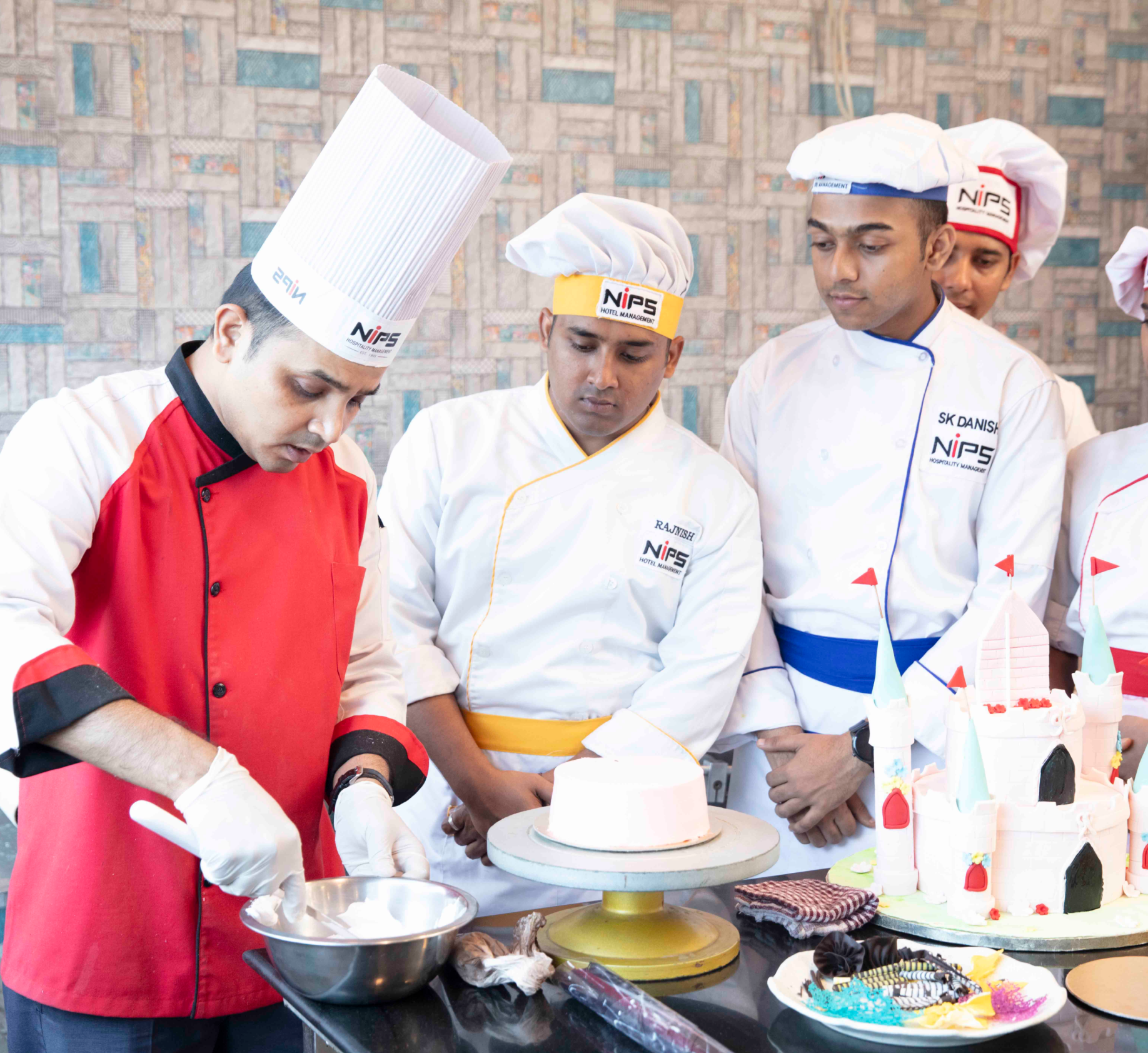
But here is the truth about hotel management education: the building is background. What happens inside that kitchen lab, the corrections a chef instructor makes when you are cutting vegetables wrong, the story they tell about the night a VIP dinner almost went sideways at the Oberoi, that is the education. That cannot be photographed.
The hospitality industry runs on people. On instinct, on pressure, on knowing exactly what to do at 7 PM when the kitchen is two chefs short and a table of 12 just ordered. You do not learn that from a textbook. You learn it from someone who has lived it.
The industry context makes this even more urgent. According to IBEF, approximately 200,000 new jobs are expected in India’s hotel, restaurant and tourism sectors, and travel and tourism already supports over 46 million jobs across the country, contributing 6.6% of India’s GDP. India’s hospitality market is projected to reach USD 27.96 billion in 2026, growing at a CAGR of 14.76%, according to Mordor Intelligence. These are not abstract numbers. They represent real positions that hotels across Kolkata are trying to fill with trained, capable professionals. The colleges that produce those professionals are the ones with faculty who know the industry from the inside.
The Right Questions to Ask About Faculty
When you visit any hotel management college in Kolkata, the natural conversation is about courses and fees. But the questions that matter sound like this.
- Where did your food production faculty work before joining this college? Which hotels, which cities, which years?
- Has your faculty managed a real restaurant or kitchen service, or have they taught straight from a training institute?
- Do your faculty still have active industry connections? Do they bring in guest chefs, or are they relying on what they learned fifteen years ago?
- How much of the practical training is supervised by someone who has actually worked a live 5-star kitchen service?
Most colleges will not expect these questions. That alone tells you something about how seriously faculty quality is treated in the admissions conversation.
What Industry Exposure Actually Means
The phrase ‘industry exposure’ appears in almost every hotel management college brochure in Kolkata. It has become so common it has almost lost its meaning.
Real industry exposure is not a one-day hotel visit. It is not watching a chef demonstrate a technique. It is not a guest lecture by someone from the industry who speaks for forty-five minutes and then leaves.
Real industry exposure means your child spends months inside a working hotel, in a real kitchen, at a real front desk, in a real housekeeping department, under supervision from hotel professionals who hold them to actual hotel standards. It means the gap between student and professional is closed before graduation, not after.
The difference becomes visible on day one of the job. A student who has done proper industrial training knows how to set up a mise en place under time pressure. They know the order of service. They know what ‘yes, chef’ means in a real kitchen. A student who spent their practical hours in a teaching kitchen with relaxed standards learns all of this on the job, which means they look like a fresher for much longer.
Ask any hotel manager who has hired hotel management graduates from Kolkata and they will tell you the same thing: they can spot the difference within a week.
The hotel management career opportunities that open up for a properly trained graduate, across hotels, cruise lines, aviation hospitality, and international properties, are a direct reflection of the quality of that industrial training.
At NIPS Institute of Hotel Management, the faculty who teach food production and culinary arts bring something into the classroom that no curriculum can replicate: actual experience from the floor. The BSc HHA at NIPS is built on a practical training model designed by people who have worked real hotel kitchens, not just read about them.
The Mentoring Dimension
Industry experience in a faculty member is valuable. But it is not the whole picture.
The best faculty in hotel management education are not just experienced industry professionals who switched to teaching. They are people who genuinely care about where their students end up. There is a word for that. Mentoring.
In hospitality, the mentoring relationship matters enormously because the industry is competitive, the entry-level work is hard, and the first year can be genuinely discouraging if a student does not have someone they trust guiding them through it. The best hotel management colleges in Kolkata produce graduates who stay in touch with their faculty during internship. Who call when they hit a difficult moment at work. Who know that the person who taught them food production wants to hear how they are doing.
That relationship does not happen by accident. It is built over three years of training that feels less like school and more like a professional mentorship. And it is only possible when the faculty member has enough real industry experience to be credible, and enough genuine care to stay involved.
What to Look for When You Visit Any Campus
Here is a practical checklist that goes beyond the standard campus tour.
- Ask to speak to a second-year or third-year student, privately, without a college representative present. Ask which faculty member has made the biggest difference to their confidence and readiness. Listen to whether they name someone specific or give a vague answer.
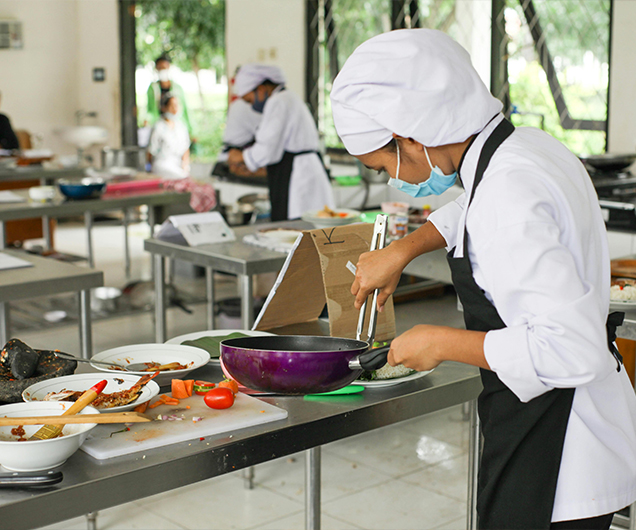
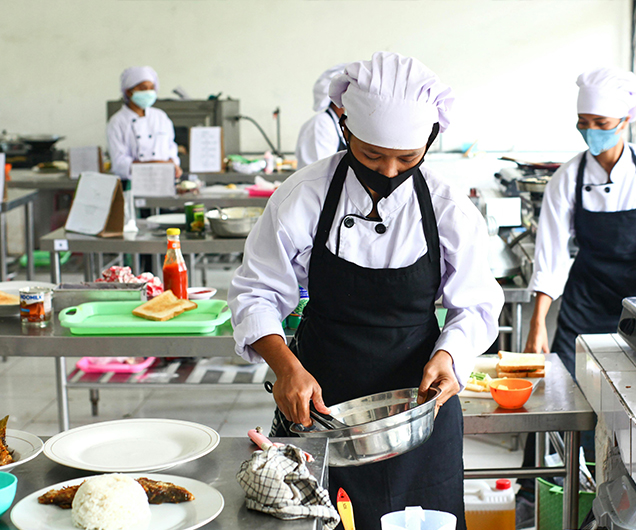
- Look at how the kitchen lab operates during a practical class. Is it relaxed and unstructured, or does it run like a real kitchen with mise en place, proper station setup, and time pressure? The atmosphere tells you more than the equipment.
- Ask what happens if a student struggles during industrial training. Is there a faculty member who checks in with them at the hotel? Or are students expected to figure it out on their own?
- Ask how recently the faculty have had direct contact with the hospitality industry, not as a visitor but as a working professional or consultant.
- Ask whether the college brings working professionals in for workshops, how often, and from which properties.
NIPS Institute of Hotel Management has campuses across four locations in Eastern India. The NIPS Kolkata campus in Salt Lake Sector V trains students within walking distance of JW Marriott, Hyatt Regency, and Novotel, all active placement partners. Students at the NIPS Ranchi campus and the NIPS Bhubaneswar campus receive the same practical training standards built on faculty with industry experience. For students from Northeast India, the NIPS Shillong campus operates on the same curriculum and faculty philosophy across all four locations.
The Question About Placement
Parents care about placement. They should. But placement is a consequence, not a cause. It is the result of what happened in the classroom and the kitchen for three years. India’s travel and tourism sector is projected to generate 100 million jobs by 2030, which means the demand for well-trained graduates coming out of Kolkata’s hotel management colleges will only grow. The best hotel management college in Kolkata does not produce strong placement numbers through a placement cell. It produces them through the quality of the graduate that walks out the door.
A student trained by faculty who have worked at Taj, Oberoi, or Royal Caribbean at an international level, faculty who have personal relationships with people in those organisations, is a fundamentally different candidate at a campus recruitment than a student who studied food production from a textbook written in 2012.
The placement record follows the faculty record. Look at that first.
For the full picture of what hotel management graduates earn in Kolkata at different career stages, the hotel management salary in Kolkata guide on nipsgroup.in breaks it down specifically.
What You Should Actually Be Asking
When you sit down with the admissions team at any hotel management college in Kolkata, these questions will give you a clearer picture than any brochure.
- Who specifically will teach my child kitchen operations, and what is their industry background?
- How much of the practical training is supervised by someone with 5-star hotel experience?
- Can I speak to a graduate from last year’s batch about their industrial training experience?
- What is the college’s relationship with the hotels where students do industrial training, is it a formal relationship, or does each student find their own placement?
- How do faculty handle a student who is struggling during internship?
The answers to these questions, not the brochure, not the campus tour, not the fee comparison, are what will tell you whether your child is going to be ready on day one of their first hotel job.
Once you have found the right college, the next step is understanding the admission process, fees, and eligibility. See the complete guide to hotel management admission in Kolkata 2026 for fees, eligibility, and application timeline.
Frequently Asked Questions
Q1: What should parents ask when visiting hotel management colleges in Kolkata?
A: Ask specifically about faculty industry backgrounds, not just qualifications. Find out where each faculty member has worked, how many years they spent in hotel operations, and what their current relationship with the industry looks like. Ask current students privately about their practical training experience and whether a specific faculty member has made a difference to their readiness.
Q2: Does faculty experience really affect placement outcomes in hotel management?
A: Yes, directly. Faculty with real hotel industry experience bring working knowledge, industry contacts, and professional standards into the classroom. Students trained by industry-experienced faculty are noticeably more job-ready during internship and placement rounds. Hotels visiting campuses for placement are aware of which institutes produce well-trained graduates.
Q3: What is the difference between industrial training and regular practical classes?
A: Industrial training means working inside an actual hotel under real conditions, real kitchen pressure, real guests, real service standards. Regular practical classes take place in a campus training lab. Both are needed, but industrial training is where students develop the professional instincts and confidence that employers notice immediately.
Q4: Which hotel management colleges in Kolkata have industry-experienced faculty?
A: Ask each college directly how many full-time faculty have worked in operational hotel roles for five or more years. NIPS Institute of Hotel Management at Salt Lake Sector V, Kolkata, has faculty with hotel industry backgrounds, with students doing industrial training at ITC Sonar Bangla, Oberoi Grand, Taj Bengal, and JW Marriott.
Q5: How important is campus location when choosing a hotel management college in Kolkata?
A: Location matters because proximity to active hotels means better industrial training options, guest lecture access, and industry network building. NIPS Kolkata’s Salt Lake Sector V campus sits within the hotel corridor that includes JW Marriott, Hyatt Regency, Novotel, and Westin, all active placement partners.
Q6: What does genuine mentoring look like at a hotel management college?
A: Genuine mentoring means students stay in contact with faculty during and after industrial training. They call when they face challenges at the hotel. Faculty track their students’ progress at placement partners. This relationship is only possible when faculty have real industry credibility and when they genuinely care about career outcomes beyond graduation.
Categories
- All (14)
- Become a Hotel Manager (2)
- Blog (56)
- Career Hotel Management (27)
- Food (1)
- Food Feast (1)
- Hospitality (1)
- Hotel Management (12)
- Hotel Management Course (14)
- Hotel Management Internship (2)
- Hotel Management Program (2)
- Hotels (1)
- International Placement (3)
- Sensitivity in Hospitality (1)
- Uncategorized (3)
Recent Posts
-
-
-
-
-
-
-

-
-
-
-
Jul 25, 2026

-
-
Jun 11, 2026
-
-
-

-
-
-

-
-
-
-
-
-
Apr 13, 2026
-
-
-
-
-

Mar 30, 2026
-
-
-

-
-

-
-
-
Mar 18, 2026
-
Mar 18, 2026
-
Mar 17, 2026
-
-
-
-
-

-
-
-
Dec 2, 2019
-

Dec 2, 2019
-

Dec 2, 2019
Popular Tags
- 5 star hotel jobs
- AI algorithms
- AI in Hotel Management
- AI tools
- Aspiring Hotel Managers
- Aspiring hotelier
- b sc hospitality and hotel administration
- BA in hotel management
- Bachelor degree in hotel management
- Bachelor in Hotel Management
- Bachelor in Hotel Management in Kolkata
- bakery and confectionery course
- BBA in hotel management
- bba in tourism management
- Become a General Manager
- become a general manager of a hotel
- become a good hotel manager
- become a hotel general manager
- become a hotel manager
- become a manager in a hotel
- becoming a hotel manager
- becoming a manager in a hotel
- best career options for students after 12th
- best courses for jobs after graduation
- best hotel management college in kolkata
- best hotel management college kolkata
- best hotel management courses
- best hotel management institute
- best hotel management institute in Kolkata
- best hotel management institute in west bengal
- best hotel management institute near durgapur
- best institute for hotel management in ranchi
- best tourism courses india
- Blog
- bsc hospitality course
- BSC hotel management
- career after 12th
- career after hotel management
- career growth in hospitality
- Career Hotel Management
- career in cruise hospitality
- career in hospitality
- career in hospitality industry
- career in hotel industry
- career in hotel management
- career in hotel management after 12th
- career in hotel management india
- career in tourism industry
- career opportunities in hotel management
- career opportunities through hotel management
- career oriented courses in india
- careers in hospitality industry
- certification courses hospitality
- certification in hospitality
- Chip
- countries hiring hotel management graduates 2026
- course after 12th hotel management
- course to do after 12th
- courses with highest job opportunities
- cruise line recruitment india
- cruise ship careers for students
- cruise ship job salary
- cruise ship jobs after hotel management
- cruise ship salary for freshers
- Digital Marketing in Hospitality
- Diploma in Hotel Management
- diploma in hotel management admission
- diploma in hotel management after 12th
- Diploma in Hotel Management in Kolkata
- diploma in hotel management in ranchi
- diploma in hotel management kolkata
- diploma vs degree hotel management
- diploma vs degree in hotel management
- eligibility for hotel management courses
- Employment Law in hospitality
- Event Management
- Event manager
- food production course
- For Sale
- front office training
- Future Hotel Managers
- global hospitality careers
- Guest Rights
- high demand career options after 12th
- highest paying hospitality jobs
- Hospitality
- hospitality and hotel administration course
- hospitality and tourism careers
- Hospitality career
- hospitality career after 12th
- hospitality career guide
- hospitality career india
- hospitality career opportunities
- hospitality career opportunities india
- hospitality career options
- hospitality career scope
- hospitality careers abroad
- hospitality careers India
- hospitality certification courses
- hospitality courses in kolkata
- hospitality courses in ranchi
- hospitality courses india
- hospitality degree course india
- hospitality diploma courses
- hospitality education
- Hospitality industry
- hospitality industry careers
- hospitality industry in india
- hospitality industry jobs
- hospitality industry jobs 2026
- hospitality jobs abroad
- hospitality jobs after graduation
- hospitality jobs for freshers
- hospitality jobs in india
- hospitality jobs overseas
- hospitality management course after 12th
- hospitality management courses in india
- hospitality management courses in kolkata
- hospitality management institute in kolkata
- Hospitality Management Program
- hospitality management training institute
- hospitality professional
- hospitality professionals
- hospitality salary abroad 2026
- hospitality skills training
- hospitality training in india
- hospitality training programs
- hotel and hospitality management course
- hotel internship opportunities
- hotel jobs after 12th
- hotel jobs for freshers
- Hotel Management
- hotel management admission 2026
- hotel management admission kolkata
- hotel management admission process kolkata
- hotel management admission requirements india
- hotel management after 12th
- hotel management after 12th Kolkata
- hotel management career
- hotel management career growth
- hotel management career in ranchi
- hotel management career opportunities
- hotel management career options
- hotel management career path
- hotel management careers
- Hotel Management College
- Hotel Management College in Kolkata
- Hotel management colleges
- hotel management colleges in india
- hotel management colleges in kolkata
- hotel management colleges in ranchi
- hotel management colleges near howrah
- hotel management course
- hotel management course after 12th
- Hotel management course details
- hotel management course duration Kolkata
- hotel management course eligibility
- hotel management course fees in kolkata
- hotel management course fees kolkata
- hotel management course in kolkata
- hotel management course in ranchi
- hotel management course kolkata
- hotel management course with placement
- hotel management course with placement kolkata
- Hotel management courses
- Hotel management courses in Kolkata
- Hotel Management Degree
- hotel management degree after 12th
- Hotel management degree in Kolkata
- hotel management duration
- hotel management duration in kolkata
- hotel management education in tier 2 cities
- hotel management eligibility after 12th
- hotel management institute
- hotel management institute in durgapur
- hotel management institute in howrah
- hotel management institute in Kolkata
- hotel management institute in kolkata admission
- hotel management institute Kolkata
- Hotel Management Institutes in Kolkata
- Hotel Management Internship
- Hotel Management Internship Interview
- hotel management internships
- Hotel Management Interview
- hotel management jobs
- hotel management jobs abroad
- hotel management jobs after course
- hotel management jobs for freshers
- hotel management jobs india
- hotel management jobs salary
- Hotel Management Kolkata
- hotel management placement
- hotel management placement record
- hotel management placements
- hotel management placements abroad
- hotel management placements kolkata
- hotel management practical training
- Hotel Management Program
- hotel management promotion path
- hotel management salary
- hotel management salary in india
- hotel management salary india
- hotel management scope
- hotel management short courses
- hotel management skills
- hotel management with placement
- hotel manager
- hotel placement opportunities
- housekeeping course
- how to apply for hotel management course
- how to become a general manager of a hotel
- how to become a hotel manager
- how to become general manager of a hotel
- international hospitality careers
- international hotel jobs
- is hotel management a good career
- is hotel management a good career option
- is hotel management hard
- is ranchi good for hotel management
- job after hotel management
- job oriented courses after 12th
- jobs after bba tourism
- jobs after bsc hospitality
- jobs after hotel management
- jobs after hotel management course
- jobs in luxury hotels
- Jobs in the Hospitality Industry
- Mobile
- naac accredited hotel management institute
- Newspaper
- nips school of hotel management
- Personalized Wellness Programs
- practical training courses for jobs
- practical training in hotel management
- quick job courses after 12th
- quick job oriented courses
- reasons to apply for a hotel management course
- Reshaping the hospitality industry
- Resume for the Hospitality Industry
- salary after hotel management course
- Sensitivity in Hospitality
- short term hospitality courses
- short term hotel management course
- skill based courses after 12th
- skills needed for hotel management
- steps to apply for hotel management course
- study hotel management in India
- Sustainable Hospitality
- Sustainable Practices in Hospitality
- things that every efficient hotel manager does
- things to know before entering the hospitality industry
- top hospitality institutes india
- tourism career opportunities
- tourism jobs in india
- tourism management course after 12th
- tourism management salary
- travel and tourism courses
- Trend in Hotel Management
- work abroad hotel management
Don't Miss Our Updates